Prostate Biopsy Alternatives and Options: My Story

Personal Blog on Treatment and Diagnosis of Prostate Cancer, Prostatitis and BPH

Another Prostate Update

I had my annual checkup with my local urologist.  He found no change in the DRE.  My PSA result was 2.8, still slightly above where it was a year ago but not a very big change.  My local urologist believes there is no need for another biopsy at this time but suggested blood tests for PSA in another 6 months to make sure there was not a large change.  This is good news as far as I’m concerned.  It’s actually a hair lower than my test 6 months ago, but that could easily be within day-to-day variations and because the two physicians use different labs, too.

As for PSA screening, there is this article that is of interest:

http://www.nytimes.com/2010/03/10/opinion/10Ablin.html

So, more evidence that just a moderately high PSA level alone may not be a good reason for a biopsy without other factors!

Another Blood Test

I got the results of a recent blood test from my primary physician.  My PSA is still rising, now up to 2.9.  This was the same lab that measured a 2.4 just under a year ago.  Subject to day-to-day variations, this isn’t an alarming increase, but it still isn’t a good sign, either.  Generally, an increase of 0.75 per year is considered a warning sign.  My increase is below that, so hopefully more consistent with prostatitis or BPH.  It also shows my daily regimen of prostate supplements (selenium, saw palmetto, anti-oxidants, etc) is not helping so far.  I plan to consult my local urologist in a few months time.  I’ll probably get another blood test at that point, including free PSA.

Welcome to Prostate Biopsy Blog

If you’ve been recently diagnosed with an elevated or abmormal PSA level, there’s a lot of information here for you.  I’m not a doctor, nor do I have any medical training.  I do know how to use Google, so there are plenty of links where you can educate yourself.  That way, you know what to ask your doctor and when to seek another opinion.

For the whole story of my adventure in prostate fun, start at the very bottom and read upward.  I wish you the best of health and good luck in your diagnosis and treatment.

Prostate Biopsy Alternatives: Are They Necessary? Are They Worth It?

This will be my last blog for a while.  I’ll make sporadic updates, mostly if I have a checkup or want to post about a news story or something related to prostate health.  There’s one question I can now answer, but only for myself.  Was it necessary?  Was it all worth it?  Outside the standard tests that would normally be done for someone in my situation, did I waste time, money and effort trying to avoid a prostate biopsy that I ultimately had anyway?

In terms of time, I spent the morning of  Christmas Eve getting a prostate massage that was necessary for a PCA3 urine test.  I spent a night and two days in New York City for a power doppler ultrasound.  I spent 5 nights and the better part of 6 days on a trip to Washington D.C. for an MRI and a targeted fusion biopsy at the National Institutes of Health.  Granted, I got to visit with some friends on those trips, so it wasn’t a waste of time outside of the medical procedures.

In terms of cost, my PCA3 test was covered by insurance.  My portion was $9.60.  The visit to the NIH was free and they even paid a good part of my travel related expenses.  The big cost was the $950 for my power doppler ultrasound with Dr. Robert L. Bard in New York City.  I had to pay all of it up front, being told that at least part would be covered by most insurance plans as an out of network expense.  Ultimately, my insurance plan (Anthem Blue Cross) did consider the full amount as a covered expense.  Unfortunately, we have a high deductible plan and since it was the beginning of the year, I was not directly reimbursed by insurance for any of the amount.  On the plus side, it will count toward my deductible and out-of-pocket maximum limits for later in the year and will also be paid in pre-tax dollars once we are repaid from our HSA.

In terms of effort and risk, only the trip to the NIH was a big hassle.  I wish it could have been done in just a few nights, rather than 5.  Being sedated is always a risk, as are the risks of an invasive procedure like a biopsy and even just a hospital stay in general.

The trade off for the time, cost and hassle?  I now have peace of mind in that it is quite unlikely I have an undiagnosed prostate cancer.  I had hoped to avoid a biopsy, but ultimately my relatively high PSA and a couple areas identified as “very low risk” on my 3T MRI led me to decide that I should go ahead with the biopsy I had hoped to avoid.  At least the biopsy was targeted, presumably reducing the chances of a false negative.

So, was it worth it?  Would I do it all again?  Knowing what I do now, I probably would not have done the power doppler ultrasound.  At the very least, I would have tried to find a different physician to do it; preferably one who had published, peer-reviewed results, wasn’t so “commercial” in terms of hawking books and supplements and one who clearly agreed to provide a full copy of all images to me for future reference.   The PCA3 test is non-invasive and relatively low cost and effort.  The fusion MRI and biopsy was a bit of a hassle, but offset by zero cost and a nice weekend in Washington D.C.  If I have indications of risk in the future, I would strongly consider these two diagnostics again, depending on what other options are available at the time.

Obviously, my situation is unique.  Everyone else has different circumstances and different preferences on treatment.  In that I’m not a doctor and have no medical training, my opinions are not valid for anyone else.  What I do know is that everyone should question their doctor if they think they aren’t getting enough information to make an informed choice, especially if that decision involves cancer or another serious condition.  The internet is a powerful tool for research and if you find your physician was too busy to answer your questions or perhaps even underinformed about options, you should definitely seek out another physician or specialist for a second or third opinion.

If you find yourself in a similar situation as mine, I wish you the best of luck in your research, diagnosis and treatment.  Peace, and good health!

—————–


If you happen to be interested in sponsoring my blog in exchange for a banner advertisement, please send an email to webmaster “at” prostatebiopsyblog “dot” com .  I’d love to recoup the costs for that ultrasound and donate some more money to related charities, like the PCF.   Prostatebiopsyblog.com now gets reasonable google search placement on relevant terms.

Can You Prevent Prostate Cancer?

Maybe you’re like me.  You have some indications like a high PSA level, but your biopsy is negative and you have no physical symptoms.  Maybe you’re in a high risk group or just a health nut.  Is there anything you can do to prevent prostate cancer from starting?  I have searched a lot for alternatives to a biopsy.  In the process, I’ve seen a number of alternative therapies, some touted as a prevention, some as a cure and some maybe as both.

You’ll find them on a search, too.  There are books that tout special diets.  There are websites that claim their secret bio cleansing method will help.  Of course, there are herbal cures and patented mystery pills that promote prostate health.  I’m sure someone has treated prostate issues with magnets, acupuncture, chiro and almost any other therapy you can name.  For patients without prostate cancer proven by a biopsy, these remedies will work like a charm, of course, and they will proclaim they have been cured.  That’s because most of these men had only fear, not prostate cancer.  Prostate cancer usually grows very slowly and is not often very aggressive, so the purveyors of snake oil don’t take a lot of risk hawking their products without any scientific study measuring their outcomes.  Of course, those who ignore the signs and avoid proven diagnostics and treatment will only have themselves to blame if they wait too long and have their options limited as a result.

Patents, testimonials and obscure foreign studies are one thing.  Having statistically significant findings published in a peer reviewed journal are another.  That patent may prevent someone else from selling the same thing, but it doesn’t mean your product works.  That obscure study was not only flawed, it was probably financed by the those who made the product.  Do you really want to risk your life, based on the testamonial of someone who wrote something on the internet? [Read the rest of this entry...]

Prostate Cancer Treatments: The Major Options

While waiting for my biopsy results, I did scare myself by doing a bit of research on treatments.  Many alternatives exist.  The most proven one is an open radical prostatectomy or RP.  In the hands of a very experienced surgeon, this method has the best long term cure rates and among the best success rates for long term incontinence and impotence, too.  A handful of experienced surgeons across the country have done thousands of these surgeries, including the nerve-sparing procedure for those with early stage cancer.

This isn’t to say open RP is the best treatment for everyone.  There’s a robotic procedure (RRP or DaVinci) that is gaining popularity.  It’s too new for long term results, but it looks to be similar to that of the open procedure if you can find a very experienced surgeon.  Again, from my research, the choice of an experienced surgeon appears to be at least as important as the choice of which surgery to have.  A surgeon that has done hundreds, if not thousands, of the same procedure is ideal.  Even better is one who has published results or at least one who will share detailed  statistics on their results with you.  Another thing to ask is for referrals to patients who have had a “trifecta”.  That’s the term for a long term cure of prostate cancer with no long term urinary or sexual issues (be careful on how a surgeon defines incontinence and impotence).  If you’d ask for referrals on home contractors, you should absolutely do the same for someone about to cut you open! [Read the rest of this entry...]

Prostate Screening: Does it Help? Does it Hurt?

It’s now three weeks since my biopsy and I’m pretty much back to normal.  All of the annoying side effects are finally gone.  I am really not looking forward to ever having another biopsy.  It wasn’t horrible, but definitely not something I wish to repeat.  In other recent news:

From the New York Times-

The PSA blood test, used to screen for prostate cancer, saves few lives and leads to risky and unnecessary treatments for large numbers of men, two large studies have found.  

The findings, the first based on rigorous, randomized studies, confirm some longstanding concerns about the wisdom of widespread prostate cancer screening. Although the studies are continuing, results so far are considered significant and the most definitive to date.


Dr. Peter B. Bach, a physician and epidemiologist at Memorial Sloan-Kettering Cancer Center, says one way to think of the data is to suppose he has a PSA test today. It leads to a biopsy that reveals he has prostate cancer, and he is treated for it. There is a one in 50 chance that, in 2019 or later, he will be spared death from a cancer that would otherwise have killed him. And there is a 49 in 50 chance that he will have been treated unnecessarily for a cancer that was never a threat to his life.

Prostate cancer treatment can result in impotence and incontinence when surgery is used to destroy the prostate, and, at times, painful defecation or chronic diarrhea when the treatment is radiation.


I think it’s clear we need more accurate diagnostics, especially ones that are less invasive than a biopsy.  There is an obvious need to know how large and aggressive a cancer is before deciding if radical treatment is necessary.


Update: The New York Times added this article today

Negative Biopsy but High PSA: What Happens Next?

A biopsy can’t rule out prostate cancer.  Some men have 2, 3 or even more biopsies before they finally detect cancer.  Sometimes, they just miss it, because the major flaw inherent in using a biopsy to search for cancer is that it only samples a very small percentage of the prostate tissue.  It’s also possible that there was no cancer originally and it developed after the first biopsy.  In fact, some studies indicate that prostatitis, BPH or atypia may increase your risk of future cancer, so being diagnosed with these means you need to keep a close check.  There are also apparently some areas of the prostate that are difficult to sample during a typical transrectal ultrasound (TRUS) biopsy. 

Fortunately, there are newer techniques for prostate biopsies other than the random 6 or 12 sample method done in in a typical urologist’s office.  Like the targeted MRI/TRUS fusion biopsy I had, there are also saturation and ”mapping” biopsies that use more samples or some type of specialized imaging to improve the coverage and reduce the chance of a false negative.  Some of these are transperineal, meaning they are done through the skin, rather than through the rectum.  A biopsy like these might be considered by higher risk patients who have had a negative biopsy in the past.  [Read the rest of this entry...]

My Prostate Biopsy Pathology Report is In. Good News!

Great news!  My biopsy was negative for cancer.  I’m also very glad it only took a little over a week, as I was told it could take 2-3 weeks.  The waiting is not fun; it’s on your mind very frequently.  Now, I get to put it out of my head for at least 6 months until my next checkup!

I temper my relief a little bit, because I know that there are a lot of false negatives with prostate biopsies.  This was one of my main concerns about having a biopsy in the first place.  While a biopsy can confirm the presence of cancer, it cannot rule it out completely.  In fact, a single, standard biopsy may not be all that much better than a PCA3 test or a 3T MRI for ruling out small, less aggressive tumors of the prostate.  Also tempering my great relief was a finding of an “atypical gland” in 2 of the 16 core samples.  This is basically a warning to keep close check on my PSA and have a regular DRE.  I’ve had a handful of suspicious moles removed in the past.  While none have turned out to be cancer, a couple did come back as “atypical”.  So, I also have a dermatologist check my skin at least once a year, too.

I am still very relieved.  Combined with my PCA 3 test and my 3T MRI results, the negative biopsy hopefully means I do not have prostate cancer at all and almost certainly means I don’t have any large or aggressive tumors.  Amen.

MRI Images Fast!

After I got home from my trip to the NIH, I faxed in the form needed to get a copy of my MRI results.  Three business days later, I received a packet in the mail with a paper copy of my MRI report, X-ray report, blood tests, urine tests and other lab results (the biopsy pathology report can take 2-3 weeks). 

The best part?  A custom labeled DVD with almost 1400 images from my MRI exam, complete with an included viewer.  This is what I expected from my $950 ultrasound, but ended up with 5 still photos that almost completely failed to document the “3D/4D” ultrasound I was supposedly given.

I can’t interpret the MRI images any more than I could interpret the ultrasound images, but at least I have them for reference if I ever need them.  As I expected, the limited ultrasound images were not very helpful to the urologist or radiologist at the NIH.  So, for anyone considering any type of prostate ultrasound (colorflow, color doppler, power doppler, 3D, 4D etc) or  MRI (MRSI, MRIS, spectroscopy, diffusion weighted, contrast enhanced, T2-weighted, 3T, etc), be absolutely sure to ask what types of images you will receive.  If you aren’t happy with the response, you should probably look for another physician, especially if you are paying for the service up front.

Anyay, for as much flak most government agencies get in regards to efficiency and customer service, I am pretty impressed with the NIH.

What to Expect After Your Prostate Biopsy?

You’ll probably get a care sheet from your urologist.  Maybe you found a website with a list of possible side effects on the internet.  Beyond that, there aren’t a lot of reports with personal experiences from a prostate biopsy.  Probably for obvious reasons.  Most guys don’t want to talk about it.  Some are just too tough or too cool to tell it like it really is.  With a careful Google search, you can find some personal experiences on the procedure.  There are even a few horror stories.  If you’re sqeamish when reading about unpleasant medical complications, STOP READING NOW! [Read the rest of this entry...]

Clinical Trials with Advanced 3T Prostate MRI

The prostate MRI like the one I had is not unique.  I mentioned in an earlier blog that a urologist in Florida does 3T MRI screenings for a fee, some of which is paid by insurance.  This is also an area with clinical research, such as the study I entered at the NIH.  I was told that I was somewhere around the 75th patient in this particular trial.  I believe this is the link for the trial I entered, but it may be a related trial and not the exact one where I participated:

http://www.clinicaltrials.gov/ct2/show/NCT00182624

Other major centers are doing similar research, notably, the MD Anderson Cancer Center in Houston, Beth Israel Deaconess Medical Center at Harvard and Memorial Sloan Kettering Cancer Center in New York.  These are all among the top research institutions for prostate cancer.  You can search for such trials at www.clinicaltrials.gov.  Here’s a few I found that might be similar:

http://www.clinicaltrials.gov/ct2/show/NCT00588679

http://www.clinicaltrials.gov/ct2/show/NCT00429338

http://www.clinicaltrials.gov/ct2/show/NCT00831142

These are just a few active studies I found that appear to be recruiting participants.  These may vary from the study I entered in important ways, so you would need to read about the details and contact the researchers to make sure the study applies to you.  For example, some may have age limits or require that patients have a positive biopsy result for prostate cancer.  There may also be other studies I didn’t find in a quick search, or those that are still open but not actively recruiting.  It doesn’t hurt to email a researcher if you find one like this.  Clinical trials aren’t for everyone.  They may or may not help in a diagnosis or treatment.  You have to do a lot of your own research to determine if one is right for you.  Remember that not only might a clinical trial help you in the short term, but they will help others in the long term by advancing the technology for detection and treatment of prostate cancer.

Heading Home

My TRUS/MRI fusion biopsy is now over and the joy of waiting 2-3 weeks for the pathology results begins.  The good news is that Dr. Pinto thought it was very unlikely there would be any findings, given all my results so far.  In addition, he said they were unable to reproduce the dark (hypoechoic) region that was a concern to Dr. Bard on his ultrasound.  He said that one very low risk area they did target may have been in the same general area, but I inferred that there just wasn’t enough information to correlate them from the limited 2D ultrasound images I received from Dr. Bard in New York.  From what I’ve gathered, ultrasounds of all types are not always consistent and can even be manipulated to some degree, thus one of the reasons they aren’t widely accepted for prostate cancer detection.

I also got the results of my PSA blood test measured at the NIH.  It was 2.7, the same result I had at my urologist in late 2008 and essentially the same result as the first reading of 2.5 I had almost one and a half years ago.  This is also a bit of good news, as a rapidly rising PSA level can also be an indicator of prostate cancer. One study of PSA velocity indicated that a change of 0.75 in one year is a concern, while a change of 2.0 in one year suggests a higher risk of aggressive prostate cancer.   My level is essentially unchanged or a very slight change, as I understand that day-to-day variations can easily account for a few tenths of a point.  So, if my level was to go up to 3.5 or so a year from now, that would probably be a concern, while a smaller increase may be more indicative of prostatitis or BPH. 

Anyway, I was discharged from the NIH this morning and am waiting at Reagan National Airport for my flight home.  I haven’t had a fever since yesterday morning.  I do need to continue my course of prophylactic antibiotics (Cipro) for 2 more days.  Otherwise, I’m feeling pretty good.  No issues with blood in urine since the first few hours after the procedure.  I do have a slight bloody nose this morning, though.  I gather it was probably pretty dry in the hospital, especially considering the cold wave that hit while I was there.  It was about 15 degrees outside.

My room mate was in fair condition.  Recovery from a radical robotic prostatectomy isn’t easy and I’d guess his was pretty typical for the first day.  Fortunately, it didn’t sound as if there were any serious complications and I wished him a speedy recovery.

My Dreaded Prostate Biopsy

From the beginning, the pretense of my blog has been that many biopsies are probably unnecessary, given the sheer number that are done (about a million a year) and the large percentage that turn up negative.  I didn’t have any “smoking gun” that indicated I was at risk, other than a PSA level that was somewhat high for my age.  In fact, my DRE and PCA3 tests did not indicate suspicion of cancer and my ultrasound and MRI results only had minor areas of suspicion.  Had they been completely normal, I probably would have opted not to have a biopsy at this time.  In that the MRI identified at least one suspicious area deemed very low risk, the biopsy seemed necessary. 

(There’s a little TMI in this long blog entry, so don’t read on if that kind of detail makes you queasy or whatever)

I was nervous about it, having postponed mine for two months now.  Reading all the internet horror stories didn’t help, either.  It didn’t help much knowing that the odds of being one of those horror stories are very long.  After all, my experience with urologists includes a failed vasectomy.

[Read the rest of this entry...]

3T MRI Diffusion/Spectroscopy Results

I have a summary of results from my 3 Tesla high resolution MRI, given to me by one of Dr. Pinto’s associates.  I am told this included a T2-weighted (T2W) 3T MRI scan.  If I understood correctly, they also took scans with spectroscopy (MRIS) and then with diffusion weighting (DWI) as well and finished with contrast enhanced (CE) images that I assume related to the injection I was given.  I was told the report indicated that there were no suspicious lesions whatsoever(!).   The only finding was a pattern consistent with prostatitis (non-malignant infection or inflammation of the prostate).  Very good news, but again it’s an experimental trial so it can’t rule out prostate cancer.  I was also told that the radiologist, Dr. Choyke ,consulted with the urologist I saw yesterday, Dr. Pinto.  Having been advised of the ultrasound findings I gave them, I have the impression that the radiologists took a second look at the area in question.  They apparently decided that there may be one area of interest, but deemed it very low risk.  So, I will proceed with biopsy tomorrow, including a “fusion” biopsy targeting the one suspicious area.

I am hopeful the biopsy will be negative and that all I have is indeed prostatitis.  Of course, even a negative biopsy report is not enough to rule out cancer and this has been the basis of my blog.  On the other hand, I’m at the point where the only other alternative available to me is “watchful waiting”.  So, I decided to have the biopsy and pray it will help to put my mind at ease.   After all, I’m already admitted to the NIH, it will be done in an OR and under mild sedation.  Plus, it’s free.   Combined with the targeted fusion system, it’s a more comprehensive alternative compared to a typical outpatient prostate biopsy procedure.  Assuming the biopsy is negative, I would then still continue with routine PSA/DRE at my checkups to make sure nothing changes, but I will do so knowing that no available test could confirm the presence of cancer.

First Day at the NIH

Despite nearly being stuck at O’Hare airport in Chicago due to thunderstorms, my flight managed to depart for Reagan Washington National.  For anyone looking for a hotel near the NIH, I’m staying at the Hyatt Regency Bethesda until I’m admitted on Sunday.  The Hyatt is very conveniently located right atop a metro station.  One transfer between the airport and hotel, very handy.

My next day started at 8AM.  The NIH was one stop away on the metro.  After checking in through security, I walked to the main building, #10.  Registration was relatively quick, with fewer forms than a typical office visit.  The nurse who had been corresponding with me via email (Celene) then met me to show me where I’d be going throughout the day.  My next stop was at the lab for blood and urine samples.  Then to radiology for a chest X-ray.  Then to have an EKG.  Everything was very efficient, so much so that I finished over an hour earlier than scheduled and had time to take in a light breakfast.  The staff has also been very professional all around.

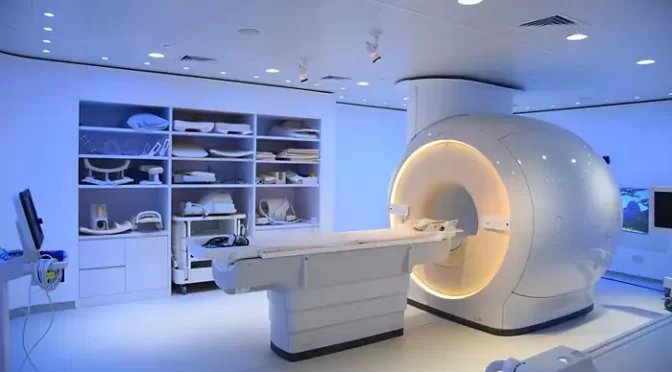
My 3T MRI with spectroscopy was delayed a little, but went without a hitch.  It was quite an extensive scan, taking about 1 hour and 10 minutes in the tube.  Even with earplugs and headphones, it was fairly noisy.  I also had the displeasure to experience the “Endorectal Coil” used to enhance the images.  Getting it into place wasn’t very pleasant, but it was tolerable for the rest of the exam.  Another set of enhancement coils was set on top of me.  Near the end of the scan, they injected me with gadolinium to enhance the last set of images.  They also took additional images at without the coils before I was finished. [Read the rest of this entry...]

Making A Difference

I don’t plan to be racing anytime soon in order to raise funds for worthy charities related to supporting prostate cancer research.  Instead, I’d like to give credit to another Darren who is my age and is now racing for a cure:

http://darrenritch.blogspot.com/2009/02/help-me-make-difference.html

If you are considering a charitible contribution for medical research, please take a look.  Prostate Cancer is among the most common and most deadly of all cancers.  Also, if you have the time, take a look at Darren’s blog.  It’s a compelling journal of his experiences.

I’m off for my trip to the National Institutes of Health this week for my 3T MRI, possibly followed by a biopsy.  I’ll have more to write this weekend and next week.

Ultrasound Images At Last

prostatedoppler$950 later, I finally got a whopping five ultrasound images.  This was from my prostate ultrasound test in New York City last month by Dr. Robert Bard.  The lure of the “3-D/4-D” power doppler sonogram was the promise of hundreds or thousands of color enhanced images that could be turned into a three dimensional view that would also show motion in real time.  What I actually received after my appointment was a single, 1990s fetal-ultrasound-quality, black and white polaroid-sized image.

Prior to the appointment, I specifically asked if the images would be available to me in some format for a second opinion, if necessary.  In reviewing the cryptic response from the Dr. Bard, it seems it might have even been intentionally vague or even dodged the question altogether.  I guess that should have been a red flag.  Nonetheless, after the ultrasound, he said a partial set of images would be available and referred me to his staff.  I was sent a single black and white digital image, though it was at least more detailed than the polaroid.  I repeated my request and got no reply.  After a couple weeks, with my next consultation looming for the MRI, I sent another request.  A few more exchanges resulted in five images being sent to me, as the previous email with the first image must have been corrupted.  Apparently, five images were all they kept!  For all the promise of this technology, they claim to have kept only five 2-dimensional images out of thousands, with zero benefit of 3D or 4D available to me for future reference or a second opinion! [Read the rest of this entry...]

Get Checked.

It’s OK to be fearful of an invasive procedure.  A little fear can lead to a second opinion, maybe a better one.  On the other hand, a little fear shouldn’t keep you from getting checked at all.  Since I have no medical training, I can’t give specific advice on what someone else should do, once they find out there is a medical concern.  I can give advice on what you should do if you don’t think you have a problem, though.

If you’re 40 or older, have your physician add PSA level to your blood test at your routine checkup.  Have him do a DRE.  These simple things could catch a disease before it becomes life threatening.

If you’re in a high risk group, have this done before you’re 40.  If you haven’t had a routine physical in a while, schedule one today!

Prostate Cancer isn’t some rare disease that happens to that other guy.  It’s the second most common cancer in men and also the second leading cause of  cancer death for men.  In fact, one man in six will be diagnosed with prostate cancer in their lifetime.  I had no idea I had an enlarged prostate or high PSA level.  I still have no physical symptoms whatsoever.  Prostate cancer may not cause any symptoms, until it’s too late.  Don’t leave it to chance.

That’s pretty much all I have for now.  I’ve caught up on most everything I’ve learned in the last few months.  I won’t know much more about my situation until early March.  I will blog here and there as I find interesting websites or research, but probably not on a daily basis.  For now, I have not been diagnosed with cancer and I hope I can report the same in future blogs.  Thank you for reading and for your support!

Darren

Getting a Baseline: A Hassle But Not a Waste of Time

The time and expense involved in having all these tests may seem like a lot of effort in order to avoid a biopsy.  Based on what I’ve learned so far, an invasive “random” biopsy (with its associated risks) still doesn’t seem like the best course of action for me, given my results so far.  Alone, PSA levels, DRE, a PCA3 test, a power doppler ultrasound or a 3T MRI scan may not be any better than a biopsy as a method to rule out cancer.  Combined, I suspect they could indeed be enough to detect cancer with a reasonable degree of sensitivity.  Plus, in the case of the ultrasound and MRI, they may also even be able to help guide a biopsy to a suspicious location.

There’s another reason all these tests may come in handy.  Even if I don’t have cancer, I know something is up with my prostate.  It might be prostatitis, it might be BPH, it might just be the way I was born.  Years from now, I may start to have another prostate issue.  In fact, a large number of men do get prostate cancer at some point in their lifetime.  What I will have now is a baseline for PSA, PCA3 and MRI results to compare to any lab results in the future.  I had hoped to have the same for ultrasound results, but that has been a disappointment so far, but I’m not sure if that is related to the physician, the ultrasound technology itself or both.  Anyway, these results can also help detect changes that might be important and rule out anything that may not be of concern because it hasn’t changed much over time.

At the very least, I’ll probably have my PSA level checked every 6 months to a year.  If PCA3 testing becomes more widely accepted, perhaps I will do that annually, also.  If one or both of them go up significantly, then it might be time for some other action.  Of course, this all depends on the results of my MRI/biopsy next month.

Another Bit of Good Fortune: The Frugal MRI

I was a bit discouraged about the cost of having a new, high resolution prostate MRI.  $5000 is a lot of money, especially in the current economy where it could pay bills for a couple months, as layoffs are looming everywhere.  There had to be something similar and less expensive in the Chicago area.  With major universities like the University of Chicago, Northwestern, Loyola and the University of Illinois at Chicago, someone had to be doing it.  That’s not even including the dozens of private hospitals and clinics in the area and other nearby universities like Iowa, Purdue, Wisconsin and Illinois.  Still, I could find nothing on almost every kind of search I tried.

What I did find was research.  Names and email addresses of urologists, radiologists and others who were doing work in prostate imaging.  One of them might know someone else doing this kind of diagnostic for patients, maybe even in the Chicago area.  I also contacted some local people who came up on a search of seminars in the local area, some through a great organization called UsToo.  Still, nothing I could find anywhere in the midwest.  The major institutions doing this type of research seem to be in Boston, New York City, San Fransisco, Houston and Maryland. [Read the rest of this entry...]

Second Opinions: Trusting Your Prostate to One Physician

My philosophy is that you should always seek a second opinion if it involves major surgery, maybe a third one if the first two opinions disagree or if it’s something life threatening, like cancer.  I did this for a reconstructive knee surgery back in 1994.  I ended up seeing one of the premier orthopedic surgeons in the country.  In retrospect, it may or may not have been worth it.  My knee is fine and my recovery was quicker than the other patients doing physical therapy for the same surgery, at the same time.  On the other hand, the trips to and from the University of Chicago hospital were a bit of a hassle for me and my family.  Plus, it was an arthroscopic surgery that was pretty standard.  I may well have gotten the same result with a local surgeon at a nearby hospital.  We have done the same for my wife for a surgery on a pituitary tumor and a on herniated disc, mostly because we were not reassured at all by the first opinion.  In the case of the tumor (which was benign), our trip to Northwestern University’s hospital was one of the best decisions we ever made.  Going to all this work to find out if a biopsy is necessary is probably a bit extreme, but I also have in mind what the next step might be.

You can’t really get a second opinion on the internet.  I suspect the legal ramifications are too great for physicians to give specific advice without a personal consultation.  You can, however, get more general advice and possibly learn whether or not another professional opinion is needed.  I did just this.  One such resource is AllExperts.com.  You can ask questions anonymously and then determine if you need to see a specialist or get another opinion.  Dr. Leslie gave me some very sound advice that was very helpful to me.  Medhelp is another similar resource.  I’m sure there are a number of other “Ask a Urologist” or “Ask an Oncologist” type of websites on the internet that may be also helpful to men with prostate issues.  You can also search for studies, research and articles by physicians.  If you find an expert who has knowledge specific to your situation, you can always call their office or email them (or their assistant) to see if you can schedule a consultation or get additional information.

There’s also the old fashioned method. [Read the rest of this entry...]

Yet Another Consultation: 3T MRI

Last night, I had a telephone consultation with a physician I mentioned previously.  He was very skeptical of my ultrasound results, having concerns with both the physician and the claimed sensitivity of the test.  He believes that based on a current consensus of experts, this ultrasound technology alone is only around 20% likely to detect prostate cancer, rather than the >90% claimed by the radiologist that did the ultrasound.  From what I understand, his preferred method of detecting prostate cancer is a “3 Tesla” high resolution MRI, followed (if necessary) by a biopsy guided by the MRI and ultrasound results.

He also suggests that in patients who do not exhibit cancer, he is able to diagnose prostatitis with his procedure.  He has a diet and dietary supplements that can help treat prostatitis and possibly lower PSA levels if they are the result of prostatitis.

I don’t have the expertise to determine who is right or who is wrong.  In all liklihood, both philosophies may have merit to some degree.  It may not be unlike how there are a number of different treatments for prostate cancer, and various well-regarded urologists, oncologists and surgeons will have their own preference as to which of them is the best option.  All of them have pros and cons which should be considered by the patient as carefully as possible.  Ultimately, it may even come down to which opinion you trust and respect the most.

As for now, I still have some options to consider.  I’m still awaiting the “partial set” of ultrasound images.  I received one small, greyscale 2D image via email this morning.  For $950, I sure hope there are more showing the areas of interest for future use.  Any benefit of having “3D”, “4D” or ”Doppler” enhancement with color are completely lost with the images I received so far.

My Super(?) Ultrasound

I had my ultrasound yesterday.  I flew to New York City to get it.  The only physican that I could find who was closer and used similar technology for my situation was near Detroit, but they wanted to do a biopsy at the same time.  There are a number of other places doing these sonograms across the country.  New York had the advantage that I would get to visit a few good friends on my overnight visit.

I didn’t know much about the physician, Dr. Robert L. Bard, beyond a few brief email exchanges, some Google searches, and a quick check at the New York state health department to make sure he was a currently licensed physician (he was indeed a licensed radiologist with no complaints listed).  Probably a little extreme to check this, but if I’m flying out-of-state to see someone for a medical procedure, I want to at least make sure I know they are legitimate and not just a website scam or something! [Read the rest of this entry...]

Future Tests for Prostate Cancer

Tests like the PCA3, Power Doppler Ultrasound and 3T MRI are all very promising and based on a lot of research.  There are a few other tests I’ve found that might be of interest.  I haven’t found much research on them, and they are probably not yet available in the USA outside of trials or studies.

http://proactivegenomics.com/

http://www.diapat.com/diapatpcms/cmsengl/front_content.php?idcat=274

http://www.johnshopkinshealthalerts.com/alerts/prostate_disorders/JohnsHopkinsProstateDisordersHealthAlert_1023-1.html

http://www.pubmedcentral.nih.gov/articlerender.fcgi?artid=1475992

http://www.clarientinc.com/Default.aspx?tabid=403 (post biopsy test)

I’m off to New York City for a power doppler ultrasound.  More next week.

More on PCA3 Prostate Cancer Urine Test

Last week I mentioned my PCA test results.  Here is a copy of the report from Bostwick Laboratories.


pca3

I have not yet been able to find a “calculator” that gives you a risk based on your PCA3 score, as there are for PSA levels.  I have found some interesting webpages and studies about results that may be of help to anyone considering a PCA3 test, because of concerns about a biopsy or repeat biopsy- [Read the rest of this entry...]

Other Resources on Prostate Cancer and Health

Here are a few websites that have helped me.  I’ve added them to my blogroll links and hope they might help you, too:

http://www.prostate-cancer.org/

http://www.cancer.gov/cancertopics/types/prostate

http://www.ustoo.com

http://www.prostatecancerfoundation.org

There are also a number of smaller blogs (like mine) and personal webpages about prostate health issues that you can find on Google.  One in particular is about a man who learned he had Prostate Cancer at 41 Years Old.  A story I read with great interest, being the same age.  As for many of the others, it’s hard to recommend them individually, because it’s difficult to contact them to see who is behind the blog.  Is it a person?  Is it a company?  Is it a medical institution?  Is it just one of those fake advertising portals?  Is it legitimate? [Read the rest of this entry...]

Another Consultation: Finding a Like Mind On Biopsies With Google

I have become more concerned about having a biopsy, given the alternatives I have found, like PCA3 and ultrasound.  I continue my search for information and options.  I found a couple websites where I was able to contact other urologists, who basically shared the same view. One suggested I might consider an extended course of antibiotics to see if I had a chronic prostate infection (Prostatitis) before doing a biopsy.  When asked about the PCA3 test or other possible diagnostics, he thought they would be interesting, but not conclusive, and would not be as reliable as a biopsy.   My question still remained.  Could a combination of other non-invasive methods be used before an invasive biopsy to reduce the number of unnecessary biopsy procedures done on men like me, with no compelling indicator for cancer? [Read the rest of this entry...]

Another Biopsy Alternative? Super Duper Ultrasound

The results of my PCA3 Plus test have at least given me some confidence that I have a little time to fully research my options before I undergo an invasive procedure like a biopsy.

Newer ultrasound technology is another step that can be done before a prostate biopsy.  Like the PCA3 test, it’s not yet widely accepted as a substitute for a biopsy.  Even so, you can find a number of research studies on ultrasounds for this purpose.  Many show them to be quite promising, especially in combination with other diagnostics.  They go by a number of different names and acronyms.  “Color Flow Doppler” (CD or CFD) and “Power Doppler” (PD or PDI or PDUS or PD-TRUS) are typical names.  It might be called a sonogram, sonography or ultrasound.  Many are “3D” or “4D”.  They all apparently give a lot more information than the generic ultrasound most urologists use.  This is apparently because these newer techniques not only see basic tissue features, but also the flow of blood at some level.  Blood flow is apparently altered in tumors or cancerous regions, so this type of ultrasound may be able to detect that.

In fact, according to my friend, Google, this technology is widely accepted and used in other areas of radiology and diagnostic medicine.  Those range from locating brain and breast tumors to getting 3D images of an unborn child.  There are a lot of studies on using them to detect prostate cancer, to help stage surgery for biopsy proven prostate cancer and even as an aid during a prostate surgery or biopsy.  The results seem to vary as to things like sensitivity, specificity and other measures, but most seem to agree that these newer ultrasounds have legitimate use on the prostate, even if not yet a replacement for a biopsy. [Read the rest of this entry...]

PCA3Plus™ Test Results Are In

I played phone tag with my urologist’s office for a while, after I discovered the PCA3 test though a Google search.  I had already verified that a number of labs did this newer test in the USA.   It shocked me a little bit that my urologist hadn’t even mentioned it when I asked about alternative testing before a biopsy.  The sales rep at one of the labs who I contacted for a referral (in case my urologist wouldn’t do it) said they even worked with my health clinic and my urologist in the past for this test.  That shocked me a bit more.  The urologist’s office is busy, though, maybe they just overlooked it or felt it wasn’t useful.  Fair enough, but I decided it was still worth a call to them.  It’s impossible to get a phone call to the doctor.  You can leave a message for a nurse, that is usually returned the next day.  The nurses seemed a little resistant to letting me have this urine test.  They made sure I realized that I must still have a biopsy.  I had already scheduled the biopsy, so I didn’t see any reason not to have more information. [Read the rest of this entry...]

Enter the PCA3 Prostate Cancer Test

I mentioned that my urologist also wanted to make sure that the traces of blood in my urine weren’t due to some other urinary problem.  So, I had an ultrasound of the kidneys to check for tumors and stones and possibly other issues.  My results were negative.  The only unusual item was a small cyst on one kidney.  Apparently, these cysts are fairly common and require nothing but a check every few years.  That was a relief.

The next procedure wasn’t quite so easy.  Another concern was a urinary infection or bladder cancer.  The way they check for this isn’t real pleasant and, to be honest, caused me a fair amount of anxiety.  I’m now thankful that in 40 years, I’ve never had to have a catheter.  Apparently, the scope used for a cystoscopy is a glorified catheter that takes video and has some other gizmos.  First, you get some local anesthetic put up your urethra.  Even though no needle was involved, it was not real fun.  The scope wasn’t much fun either.  Plus, they fill you full of fluid to expand the bladder so they can take a good look.  Still, overall, not so invasive and it wasn’t as bad as I had anticipated.  It took maybe 10 minutes, not including the anesthesia and waiting time until the procedure.  Side effects include having the constant urge to urinate and a burning sensation, which lased a couple hours for me.  On the plus side, all was normal on this exam, too.  No indications of anything unusual from inside. [Read the rest of this entry...]

Prostate Biopsy Part II: They’re not just for testing a tumor anymore

Yesterday, I discussed some of the various unpleasantries involving a prostate biopsy.

If that wasn’t unpleasant enough, here’s the kicker.  Unlike other cancers, you don’t get a ”Yes or No” (malignant or benign) diagnosis from a prostate biopsy.  You see, with most cancer, a tumor is found by hand, CT scan, MRI or other diagnostic.  Then, a biopsy is done to see if it is malignant or not.  For whatever reasons, they use an invasive biopsy to actually search for cancer of the prostate.  It’s a semi-random core sampling of 12 or more small areas within the much larger prostate gland.  If you are unlucky and have a cancer and they are lucky enough to hit the right spot, then you know it’s “Yes.”  It’s also quite possible they miss the spot.  Then you know nothing at all because of frequent false negatives.  Maybe you got it, maybe you don’t.  Some people have multiple biopsies over a period of years before they finally hit the right spot and find the cause of their worsening symptoms.  Hopefully by then, it’s not too late.

[Read the rest of this entry...]

Biopsies Part I: What they won’t tell unless you ask

I was a bit freaked out the day I heard about the various cancers I might have and the biopsy that may be to come.  Of course, I turned to Google for answers.  It’s has been a great help, but also a big curse.  What I’ve learned is a bit surprising.

To most urologists, a prostate biopsy is routine.  They just do them.  A lot of them.  It’s a relatively quick, outpatient procedure done in their office, usually taking only 20 minutes or so.  Then you’re on your way with no restrictions, but $1000 lighter, plus or minus.  Of course, usually that’s covered by insurance, so many people don’t care.  You may know someone who had a biopsy and, being a man, they probably said it was no big deal.  Heck, around a million prostate biopsy procedures are done each year in the USA alone.  That’s a big business, measured in billions.  Still, I didn’t have any lumps.  My PSA wasn’t at an alarmingly high level and hadn’t increased much in the last year.  I don’t have any other symptoms at all, urinary, sexual or otherwise.  What was a biopsy and do they just do them as a matter of routine procedure on anyone who might have any risk whatsoever? [Read the rest of this entry...]

Urologists: You don’t want to be a regular customer!

I already had a urologist.  I had a vasectomy back in 2005.  I had another in early 2008.  Yup, I was very fertile, so I needed two.  I guess they don’t always work.  My first one was a Vasclip procedure.  It was marketed as being less painful, with a quicker recovery, fewer side effects and similar success rate.  In my case, it was all true, except for the often overlooked success rate part.  The second vasectomy was less pleasant overall than the first one, but at least it worked!  Vasclip is no longer in business, but my urologist is.

Anyway, I consulted him again in November of  2008 on my physician’s advice.  He did another urine test, another blood test and another DRE.  The results were essentially the same.  DRE showed a slightly enlarged, but otherwise normal prostate.  Trace of blood in the urine.  PSA level (using their lab) was 2.7.  They also measured something called “Free PSA”.  My level was 19.3%.  Over 25% is usually considered low risk for prostate cancer.  Under 10% is considered a warning flag for prostate cancer.  My level was in between, so it didn’t add much information.  What I did learn was that a PSA level of 2.4, 2.5 or 2.7 is not normal for someone in their 40s.  While a level of 4.0 is a standard level of further action for people in their 50s or 60s, my level should have been under 2.5, and the vast majority of people my age have a PSA level under 1.0 ng/mL.

What I also learned is that the trace of blood in the urine could be related to the prostate, but it could also be related to other problems in the urinary system.  Kidney stones, kidney tumors and bladder cancer were mentioned, among other possibilities.  I’ll go into that in a future blog, but suffice to say these possibilities have mostly been ruled out at this point.  For the time being, I’m still going on a moderately high PSA level and a slightly enlarged prostate.  I also heard the word “biopsy” for the first time.  I’ll be honest, that scared me a bit, though the urologist treated it as an everyday sort of thing.

A Story of PSA Levels

I’m already a couple months into my adventure with prostate health, but it began well over a year ago.  Back in late 2007, I had a routine physical at my wife’s urging.  I wasn’t quite 40 at the time.  I had no health issues or symptoms at all, other than some lab results…  My urine test showed a trace of blood (microscopic hematuria).  My blood test came back with a PSA (Prostate Specific Antigen) level of 2.5.  My physician wasn’t too concerned.  He said to have another urine test in a few months (I did, and it was normal).  As for the PSA, he wasn’t too concerned about that, either.  He said it was at the high end of normal, but is something to watch.  Indeed, the lab report said anything between zero and 4.0 (ng/mL) was a normal result, so I didn’t think anything of it.

Not until fall of 2008, when I had to have another physical in order to do some volunteer work that required some state issued forms to be completed by my physician.  As a matter of procedure at age 40, I was given my first DRE.  Digital Rectal Exam.  Yeah, not very pleasant, but I guess it’s a fact of life from here on out.  I was told my prostate was slightly enlarged, but otherwise normal.  Apparently, prostate cancer can not only cause enlargement, but sometimes makes it feel hard and/or bumpy.  So, at least I didn’t have to deal with that, not yet anyway.

Nonetheless, there was still a concern, as my PSA level was still borderline.  This time it was 2.4.  Combined with the DRE and PSA, I showed a trace of blood in my urine again.  That was enough of a warning sign that I was told to see a urologist for a consultation.  It also set in motion the series of tests and events that let to this blog.  I’ve learned a lot over the last couple months.  As I continue to learn more, I hope I can share some of it with others in a similar situation.

What I Learned About Prostate Health, Including Biopsies, BPH, Cancer and Prostatitis

This is my personal blog about prostate health, with an initial emphasis on biopsies.  It is a journal of my adventures from learning I had a high PSA level, to having various tests and procedures.  Do I really need a prostate biopsy?  Are there any options or alternatives to a prostate biopsy?  I hope to answer these questions for myself over the upcoming weeks and months.  There will also be information on other aspects of prostate health, including cancer, as I go through more testing.

The information on this blog only applies to my personal medical issues.  I am neither a doctor or nurse, nor do I have any medical training whatsoever.  I do know that physicians are very busy and don’t always have time to keep up on the latest treatments.  I also know they can make mistakes or get stuck in a one-size-fits-all routine of treatment.  If you think you aren’t getting the best advice, do some research and get a second or third opinion from a specialist or medical professional!

For information about the blog or forums, please send a private message or email to: webmaster “at” prostatebiopsyblog “dot” com.  Thank you!